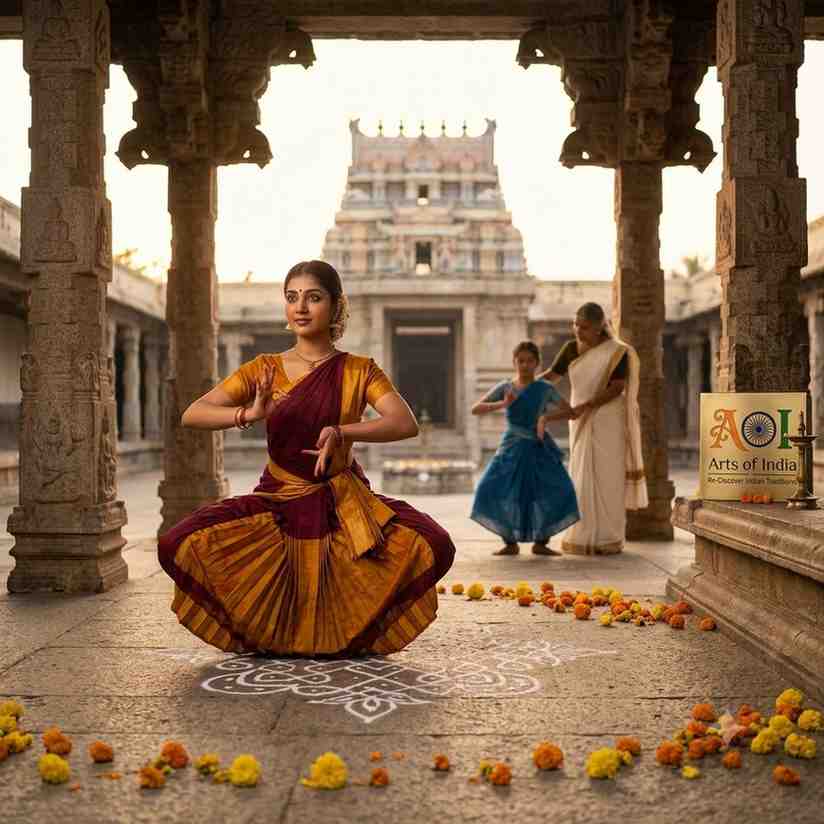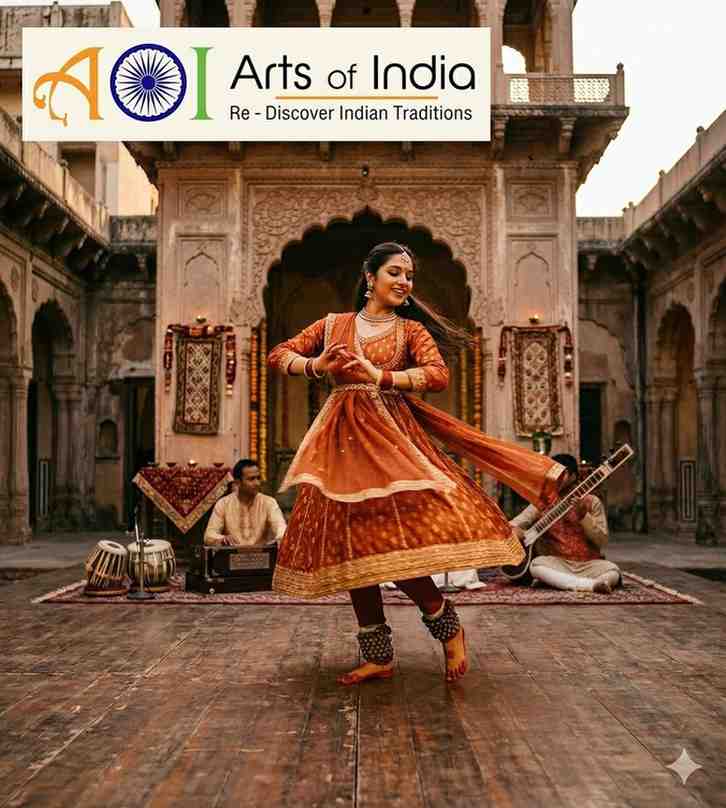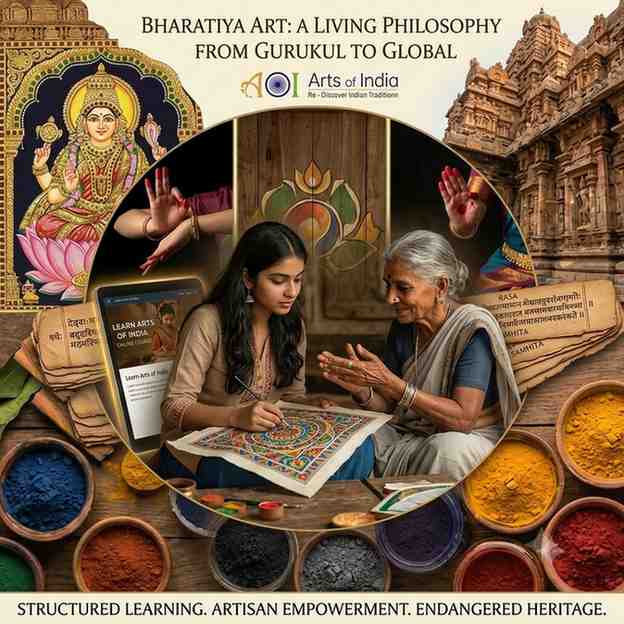
When we look at a piece of traditional Indian art—whether it is the intricate geometry of a Madhubani painting, the glowing gold leaf of Tanjore art, or the fluid rhythm of a classical dance posture—we are not just looking at a decorative object. We are looking at a living philosophy.
In recent years, there has been a massive resurgence in exploring Bharatiya art and Bhartiya Shiksha (Indian education and knowledge frameworks). Driven by global curiosity and initiatives like India’s National Education Policy, millions are turning back to the Indian Knowledge Systems (IKS) to understand the country’s profound cultural roots.
But what exactly is Bharatiya art, how does it tie into India’s ancient wisdom, and why does it matter today? Let’s dive in.
What is Bharatiya Art? More Than Just Aesthetics
The word Bharatiya relates to the core identity, geography, and ethos of India. Therefore, Bharatiya art represents the entire spectrum of indigenous art forms, philosophies, sciences, and creative expressions that have evolved across the Indian subcontinent over thousands of years.
Unlike Western artistic traditions, which historically separated “fine art” (like oil paintings) from “craft” (like pottery), the Bharatiya tradition views all creative expressions as a unified, sacred path. In ancient texts, these are classified into 64 Kalas (Arts), ranging from painting (Chitrakala) and sculpture (Shilpakala) to music, architecture, weaving, and even the culinary arts.
The Core Philosophies Behind the Art
Bharatiya art is deeply tied to the Indian Knowledge Systems (IKS), drawing direct inspiration from texts like the Natyashastra (the ancient treatise on performing arts, theater, and expression) and the Vedas. It operates on three main principles:
-
Rasa (The Essence of Emotion): Bharatiya art is designed to evoke a specific emotional state or spiritual flavor in the viewer, moving beyond simple visual appeal to touch the soul.
-
Symbolism over Realism: Traditional Indian art rarely focuses on exact anatomical perfection. Instead, it uses divine proportions, mudras (hand gestures), and symbolic colors to convey deeper cosmic and spiritual meanings.
-
Harmony with Nature: From using organic, plant-based dyes to depicting animals, trees, and rivers, the art reflects a worldview where humanity and nature coexist in perfect harmony.
Why Indian Knowledge Systems (IKS) are Trending Today
There is a major shift happening globally—a movement “From Gurukul to Global.” For decades, mainstream education sidelined traditional crafts and indigenous wisdom. Today, educators and researchers are recognizing that the Indian Knowledge Systems (IKS) provide an incredibly rich, holistic framework for learning.
By integrating arts and vocational crafts into modern learning systems, we foster critical thinking, emotional intelligence, and environmental sustainability. Experiencing art hands-on teaches patience, fine motor skills, and an organic connection to history that a textbook simply cannot match.
How “Learn Arts of India” Bridges the Gap
Understanding the beauty of Bharatiya art is one thing, but keeping it alive is another. Many of India’s most breathtaking master crafts are preserved in remote villages by rural artisans who lack access to global platforms.
This is exactly where Learn Arts of India becomes a vital bridge. Here is how the platform helps preserve this priceless heritage and how you can be a part of it:
1. Structured, Authentic Learning from Master Artisans
You don’t just learn how to draw; you learn the history, the cultural context, and the sacred geometry behind each style. Learn Arts of India brings authentic master craftsmen and women straight to your screen, ensuring that ancient techniques are passed down accurately to the next generation.
2. Empowering Rural Artisans and Women
Every course or interaction supported by the platform directly impacts the livelihoods of rural creators. By scaling the reach of these traditional art forms, it provides sustainable income, financial independence, and global recognition to women and artisan families who have kept these traditions alive for centuries.
3. Preserving Endangered Art Forms
Many indigenous art styles are at risk of being lost forever as younger generations migrate to urban tech jobs. By digitizing this knowledge and making it accessible globally, Learn Arts of India archives and revitalizes these endangered heritage crafts, making them relevant for the 21st century.
Bring a Piece of India Home
Bharatiya art is not a relic of the past meant to sit silently in a museum; it is a vibrant, living practice. Whether you are an art enthusiast, a educator looking to integrate cultural roots into your curriculum, or someone wanting to support sustainable rural livelihoods, diving into traditional Indian crafts is a deeply rewarding journey.
Explore a course, pick up a brush, and discover the timeless wisdom embedded in every stroke.
Leave your comment
Related posts