For generations, India’s rich heritage has been passed down through deep-rooted oral and visual traditions. From the expressive mudras of Bharatanatyam to the intricate strokes of Madhubani and the sacred swaras of the Veena, our cultural arts embody the spirit of the subcontinent.
However, in today’s fast-paced digital world, many traditional art forms face the risk of fading into memory, while passionate artists struggle to reach new audiences. Learn ARTS of INDIA is changing this dynamic.
If you are a master, a seasoned practitioner, or a passionate revivalist, here is how you can share your knowledge, connect with global learners, and earn a sustainable income by teaching traditional Indian arts online.
Why Teach Traditional Indian Arts in the Digital Age?
The interest in authentic Indian heritage is growing worldwide. Students across North America, Europe, Asia, and the Indian diaspora are actively seeking genuine instruction in Indian traditional arts.
Teaching online allows you to expand your reach well beyond local boundaries:
-
Global Student Reach: Share your art with students around the globe without physical location constraints.
-
Preserve Fading Heritage: Play an active role in keeping ancient traditions alive for future generations.
-
Flexible Revenue Streams: Earn through live interactive workshops, pre-recorded video modules, or personal 1-on-1 sessions.
-
Empower Rural Artisans: Provide visibility and economic growth opportunities for rural and traditional art practitioners.
What You Can Teach on ARTS of INDIA
Our platform is dedicated exclusively to authentic Indian cultural learning. We welcome master teachers, certified practitioners, and traditional artisans across multiple disciplines:
1. Indian Classical & Folk Dance
Pass on the legacy of classical and folk dance forms:
-
Classical Styles: Bharatanatyam, Kathak, Odissi, Kuchipudi, Mohiniyattam, and Kathakali.
-
Folk & Regional Dances: Garba, Kalbelia, Bihu, Lavani, and regional folk movements.
2. Classical Music & Vocal Performance
Guide students through the fundamentals of Indian music and vocal discipline:
-
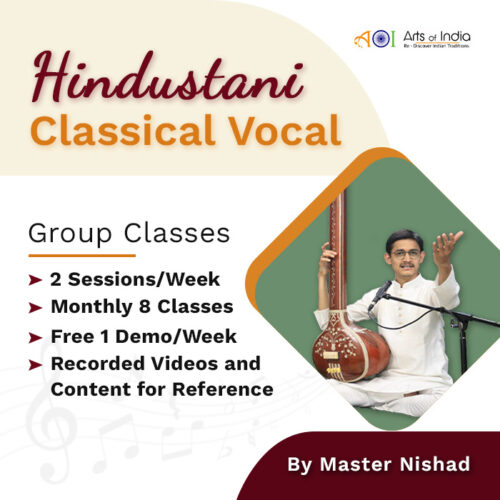
Hindustani Classical & Carnatic Vocal Training
-
Devotional & Folk Singing: Riaz techniques, Bhajans, Kirtans, and Ghazals.
3. Musical Instruments
Teach traditional instruments through modern digital learning formats:
-
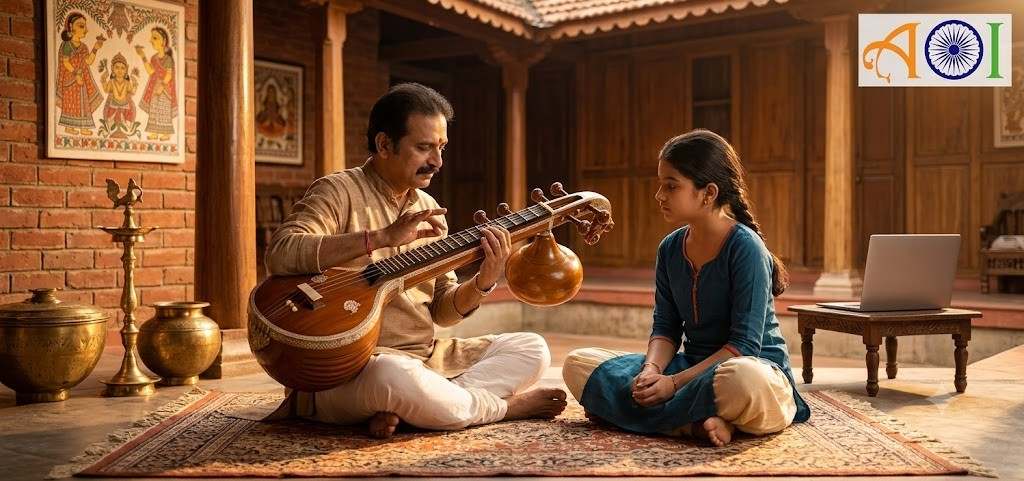
String Instruments: Veena, Sitar, Sarod, Tanpura, and Violin.
-
Percussion & Wind: Tabla, Mridangam, Dholak, and Bansuri (Flute).
4. Traditional Art, Crafts & Folk Painting
Introduce students to iconic Indian visual art techniques:
-
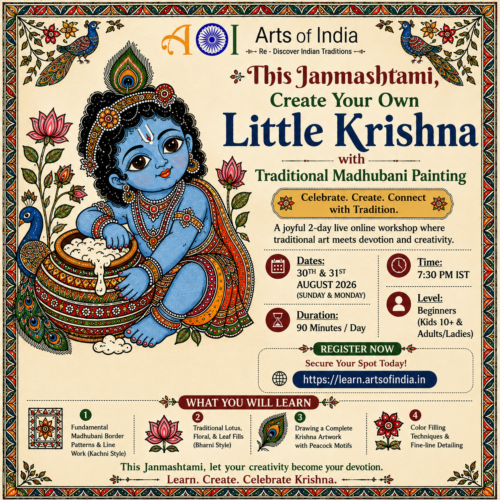
Folk Paintings: Madhubani/Mithila, Tanjore, Pattachitra, Warli, Kalamkari, and Gond art.
-
Traditional Crafts: Wood carving, pottery, terracotta, block printing, and embroidery.
4 Flexible Ways to Teach on ARTS of INDIA
We offer structured formats tailored to your teaching style and availability:
-
Live Interactive Workshops: Host live weekend masterclasses or short courses with real-time feedback.
-
Pre-Recorded Video Courses: Record structured curriculum modules once and earn residual income every time a student enrolls.
-
Local & In-Person Classes: Connect with students near your area for offline home or studio training.
-
Institutional Workshops: Lead specialized workshops for schools, colleges, and cultural events organized through our network.
Giving Back: Social Impact & Skill Development
Beyond professional teaching, Learn ARTS of INDIA is committed to empowering rural communities and economically underprivileged women through free skill development workshops.
When you join our community as an educator, you can also opt to mentor aspiring artisans in rural regions, giving them the tools to build sustainable livelihoods through traditional craftsmanship.
How to Get Started as an Instructor
Joining the Learn ARTS of INDIA faculty is simple:
-
Submit Your Application: Share your background, art discipline, and teaching experience with us.
-
Curate Your Curriculum: Work with our team to structure your live workshop or recorded course syllabus.
-
Start Teaching: Go live or upload your course modules, and let us handle platform management, payments, and marketing.
Ready to Share Your Art with the World?
Join Learn ARTS of INDIA today to help preserve India’s cultural traditions while teaching a new generation of passionate learners.