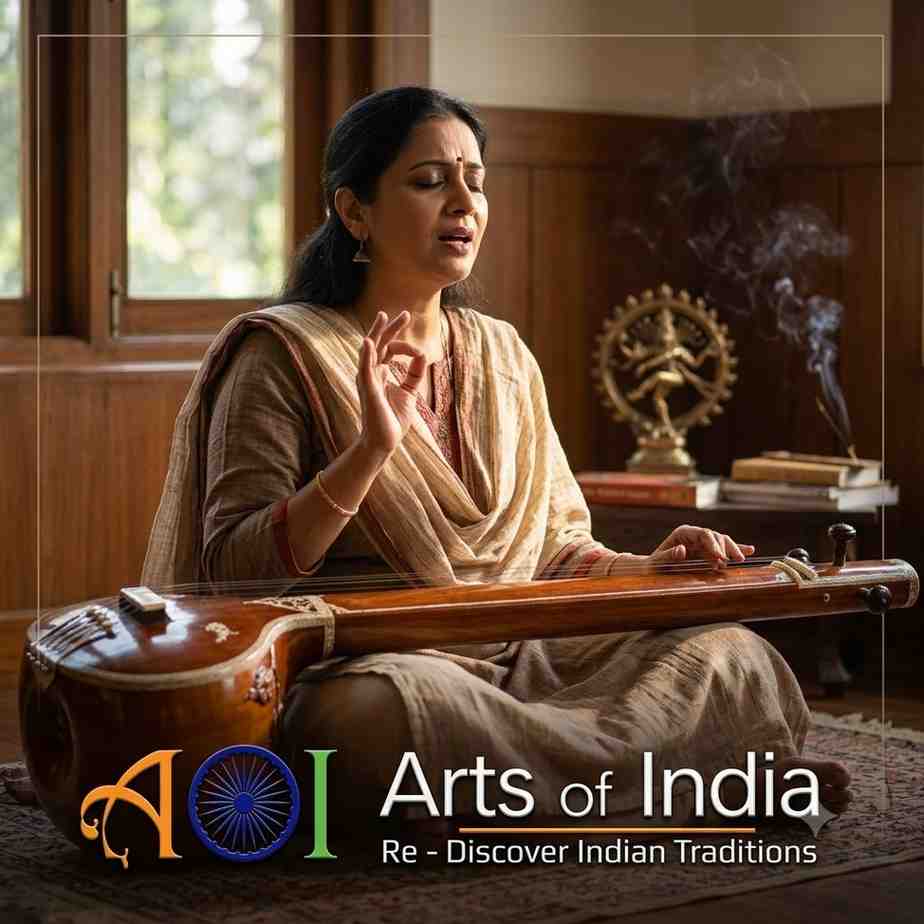
Few instruments carry the spiritual weight, historical depth, and sheer acoustic beauty of the Veena. Revered as one of India’s oldest stringed instruments, it is more than just a musical tool—it is an embodiment of Indian heritage, philosophy, and classical artistry.
Whether you are an aspiring musician or a lover of classical music, understanding the Veena opens a door to the very soul of Indian melody.
The Sacred Origins of the Veena
In Indian tradition, the Veena is not merely man-made; it is divine. It is famously held by Saraswati, the goddess of knowledge, arts, and music. Mythological texts describe the instrument’s structure as a representation of the human body: the long neck represents the spine, the frets represent the vertebrae, and the resonant gourds symbolize the mind and heart.
Historically, the term “Veena” was once used generically to describe almost any stringed instrument in ancient India. Over centuries, it evolved into specific variations, most notably the Saraswati Veena dominant in Carnatic (South Indian) classical music, and the Rudra Veena, deeply tied to the ancient, meditative Dhrupad style of Hindustani (North Indian) music.
Anatomy of a Masterpiece
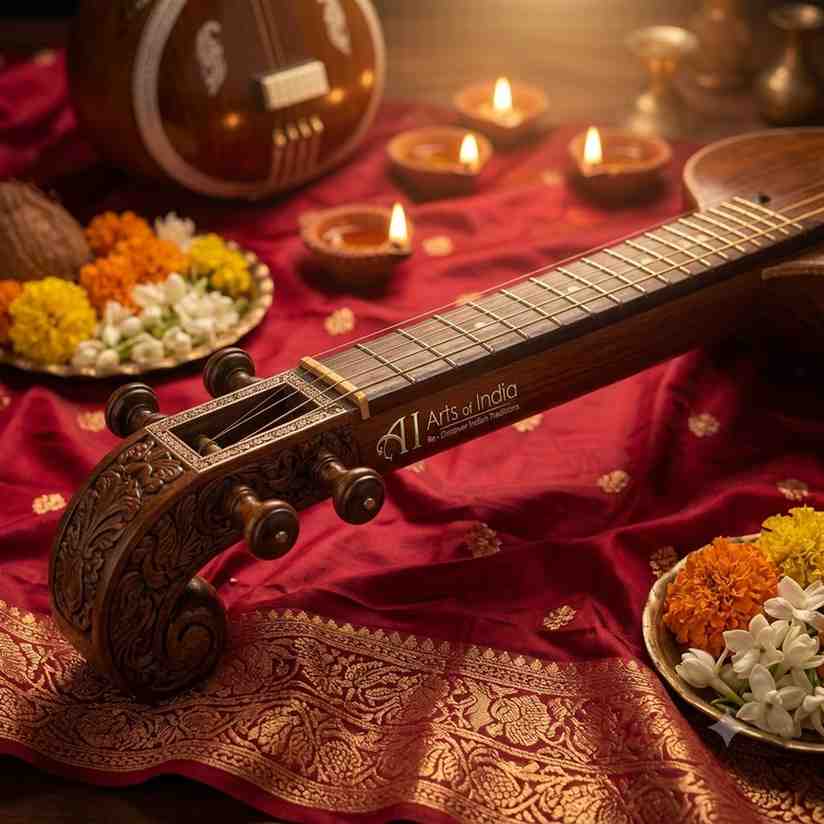
The design of a Saraswati Veena is a marvel of traditional craftsmanship, typically carved from a single piece of jackwood. Its key components include:
-
Kudam (The Resonator): The large, hollow wooden bowl at the base that amplifies the sound.
-
Dandi (The Neck): The long fingerboard where 24 brass frets are meticulously set into a bed of beeswax.
-
Surakkai (The Secondary Gourd): A smaller resonator near the top, traditionally made from a dried gourd, which balances the instrument on the player’s lap.
-
Strings: It features seven strings in total—four main playing strings that run over the frets, and three auxiliary tala strings used for rhythmic accompaniment and drone effects.
When plucked, the unique curved bridge (Kudurai) creates a rich, buzzing tonal quality called Javali, allowing the instrument to closely mimic the nuances of the human singing voice.
The Meditative Power of Veena Music
Playing or listening to the Veena is often described as a form of meditation. Because of its complex fretboard and the technique of pulling the strings sideways (Gamaka), the instrument can transition seamlessly between notes. This fluidity allows it to capture the microtones and emotional depth essential to Indian Ragas. It requires immense patience, precision, and focus, making the learning process a deeply rewarding personal journey.
Start Your Musical Journey with Learn Arts of India
Mastering an instrument as intricate as the Veena requires authentic guidance, which can be difficult to find globally. This is where Learn Arts of India steps in.
As India’s premier platform dedicated to preserving and exploring traditional skills and culture, Learn Arts of India bridges the gap between ancient heritage and modern convenience. By connecting students worldwide with veteran musicians and expert trainers, the platform ensures that the delicate techniques of Veena playing are passed down accurately to the next generation.
Beyond just teaching notes, Learn Arts of India focuses on the revival of traditional art forms and supports local artisans who craft these beautiful instruments. Whether you are starting from scratch or looking to perfect your classical foundation, their structured online curriculum and private classes provide a supportive environment to help you connect with India’s rich musical legacy.
Leave your comment
Related posts