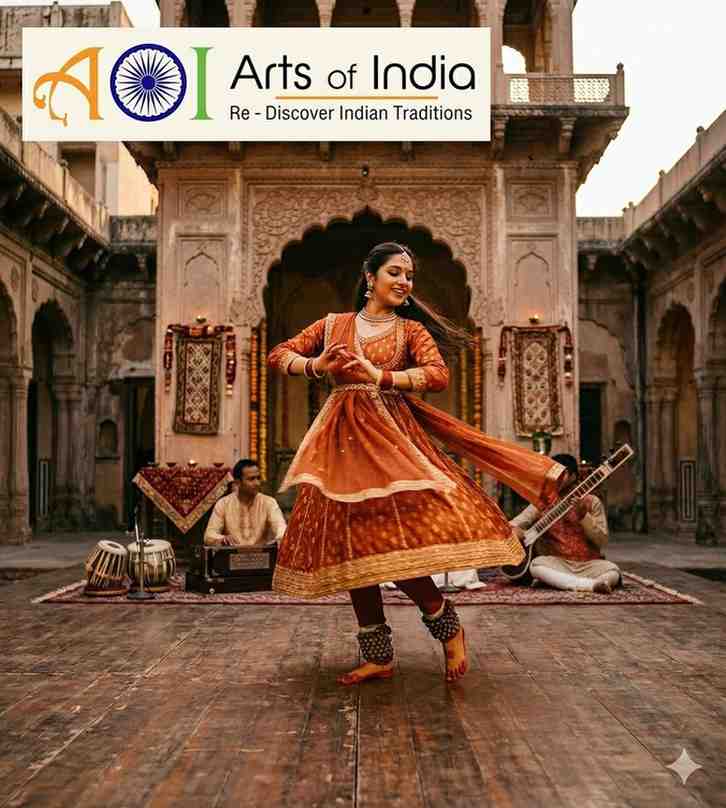
India carries a unique identity through its classical dance forms, each serving as a vibrant window into the country’s ancient heritage. Among these, Kathak stands out as an mesmerizing blend of rapid footwork, rhythmic spins (Chakkars), and profound facial expressions (Abhinaya).
Derived from the Sanskrit word ‘Katha’ (which means a story), Kathak literally translates to “one who tells a story.” If you have ever watched a Kathak dancer perform, you know it is less of a rigid routine and more of a spiritual conversation expressed through rhythm.
In this guide, we dive into the origins of this beautiful art form, its core elements, and how you can begin your own journey.
The Roots and Evolution of Kathak
Kathak originated in ancient Northern India, where nomadic storytellers known as Kathakars traveled from village to village. They narrated epic mythological tales from the Ramayana and Mahabharata using simple songs, hand gestures, and dance.
Over the centuries, the art form evolved through two major phases:
-
The Bhakti Movement: The dance absorbed deep devotional elements, focusing primarily on the divine love stories of Radha and Krishna.
-
The Mughal Era: Kathak transitioned from temple courtyards to royal Mughal courts. Here, it acquired its characteristic fast-paced footwork, intricate spins, and the distinct elegant costumes we see today.
This rich transition birthed different Gharanas (schools of dance), such as the Lucknow, Jaipur, and Banaras Gharanas, each adding a unique flavor to the dance.
Key Elements of a Kathak Performance
A traditional Kathak performance is a beautiful balance between pure technical movement and emotional storytelling:
-
Nritta (Pure Dance): This highlights the technical mastery of the dancer. It features complex rhythmic patterns (Tala), intense footwork (Tatkar), and sharp, sudden poses.
-
Nritya (Expressive Dance): This is where the storytelling comes alive. Dancers use stylized hand gestures (Mudras) and deep facial expressions to convey emotions like love, sorrow, courage, and devotion.
-
The Ghungroos: A Kathak dancer’s ankle bells are not just accessories—they are musical instruments. Mastering how to strike the floor to create distinct sounds with 100 to 150 bells on each ankle requires immense discipline.
How Learn ARTS of INDIA Helps You Master Kathak
Taking the first step toward learning a classical art form can feel overwhelming, especially if you are balancing a busy modern lifestyle. This is exactly where Learn ARTS of INDIA bridges the gap between ancient heritage and modern convenience.
Here is how the platform empowers your learning journey:
1. Learn Directly from Master Gurus
You don’t have to search far and wide for authentic training. Learn ARTS of INDIA connects you directly with expert trainers, such as Amrita Banerjee, ensuring you learn the precise techniques, correct postures, and true essence of Kathak as passed down through generations.
2. Flexible, Interactive Online Learning
Whether you are a absolute beginner or looking to rekindle a childhood passion, the platform offers structured, live interactive sessions. You receive real-time corrections on your postures and footwork right from the comfort of your home, making learning stress-free.
3. Preserving and Reviving Cultural Roots
By enrolling in a class on Learn ARTS of INDIA, you aren’t just learning a skill—you are actively participating in the revival of Old India. The platform is dedicated to sustaining traditional arts and providing global stages for artisans and performers to pass on their invaluable knowledge.
Step onto the Rhythm Today
Kathak is more than just a dance; it is a form of moving meditation that builds physical stamina, improves focus, and connects you to India’s deep spiritual past.
Are you ready to tie your first set of Ghungroos and let your movements tell a story?
[Explore Kathak Classes on Learn ARTS of INDIA today] and begin your journey into the world of classical Indian rhythm!
Leave your comment
Related posts