Have you ever looked at a Warli painting and wondered why everyone is dancing in a circle? Or noticed the double-lined borders in a Madhubani masterpiece?
Indian folk art is more than just decoration; it is a visual language. For centuries, these art forms were painted on the walls of huts and floors of courtyards to tell stories of nature, gods, and community. Today, they are finding a new home on modern canvases and digital screens.
Here are five iconic Indian art forms and the secrets they hold:
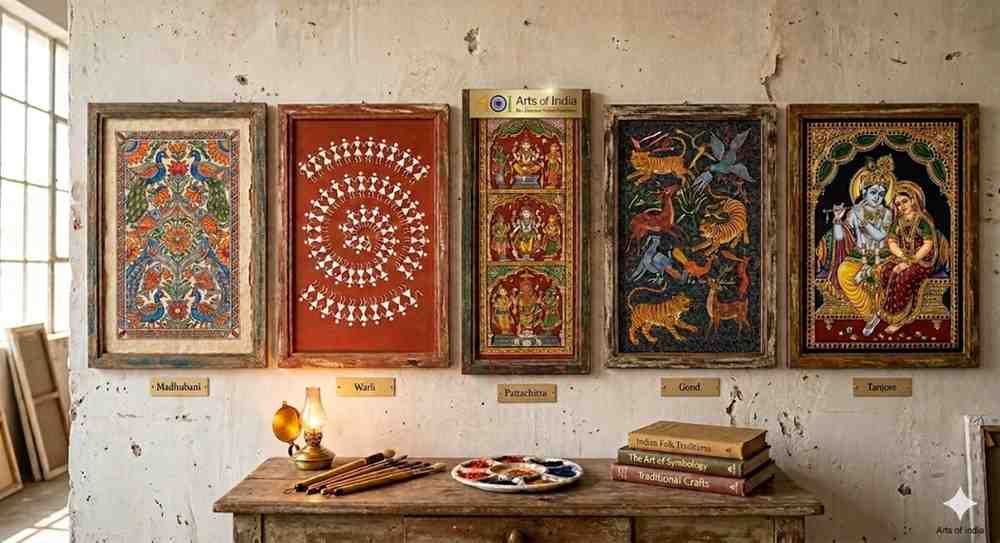
1. Madhubani: The Art of Mithila
Originating from Bihar, Madhubani is famous for its vibrant colors and geometric patterns.
-
The Secret: There is rarely any empty space in a Madhubani painting. If there is a gap, the artist fills it with motifs of flowers, birds, or geometric patterns. It represents the fullness of life.
2. Warli: The Geometry of Life
Hailing from the Sahyadri Range in Maharashtra, Warli art uses only three shapes: the circle (the sun/moon), the triangle (mountains/trees), and the square (human invention/land).
-
The Secret: The famous “Tarpa Dance” circle represents the circle of life—with no beginning and no end.
3. Pattachitra: The Cloth Scrolls of Odisha
Pattachitra is known for its intricate details and mythological narratives, usually centered around Lord Jagannath.
-
The Secret: The “paint” is entirely natural—white is made from conch shells, and black is made from lamp soot.
4. Gond Art: The Rhythm of Dots
From the heart of Madhya Pradesh, Gond art uses a series of dots and lines to create a sense of movement.
-
The Secret: Gond artists believe that “seeing a good image brings good luck.” Every line is a prayer to the spirits of nature.
5. Tanjore: The Golden Heritage
Tanjore paintings from Tamil Nadu are famous for their 22-carat gold leaf work and precious stone embellishments.
-
The Secret: These are “3D” paintings. A layer of limestone paste (gesso) is used to create relief before the gold is applied, giving the deities a lifelike presence.
Why Learn Traditional Art Today?
In our fast-paced digital world, practicing these art forms is a form of meditation. It connects us to our roots and teaches us the value of patience and precision.
Ready to start your own creative journey?
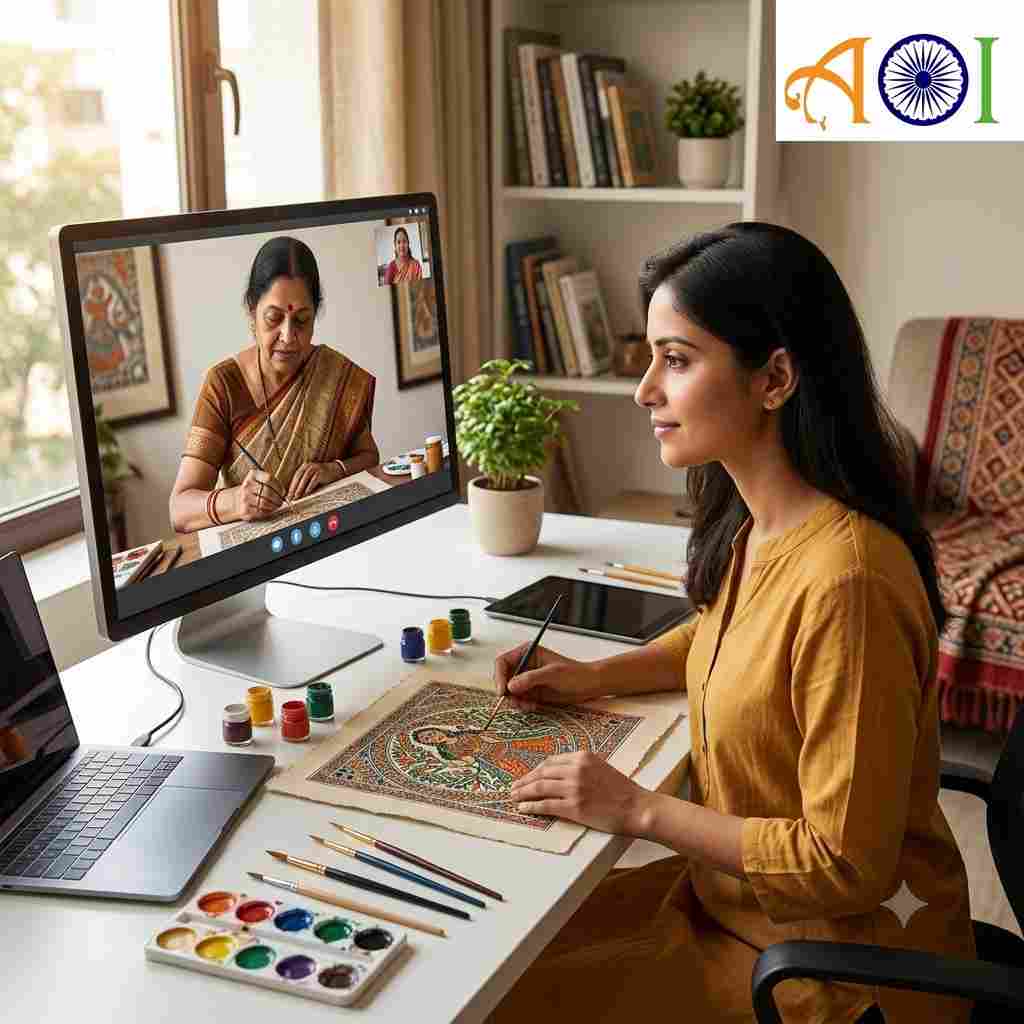
At ARTS of INDIA, we bring master artists directly to your screen. Explore our expert-led online courses and master the heritage of India from the comfort of your home.
Leave your comment
Related posts